Posts

Showing posts with the label Digestive Enzymes

5 Natural Ways to Deal with Bloating

Image
Do you ever feel a bit “overextended” in the belly after a meal? Perhaps “gassy?” Have you ever carried a “food baby?” Well, bloating is common. Up to 25-30% of people experience it regularly. It happens when you have trouble digesting. The symptoms come from excess gas, reactions to foods, or food not moving through you as well as it could. There are many reasons you might experience these symptoms. Maybe because of a serious condition (disease), or a food allergy or intolerance (what you eat). It can also result from how you eat. If you have a serious digestive issue like IBS (Irritable Bowel Syndrome), then make sure you eat accordingly. Same goes if you know certain foods give you gas. Simply avoid them. If you’re already doing those things, and still experience bloating, here are some great tips for dealing with it naturally. 1 - Don’t overeat If you overeat at a meal, then you’ll feel bigger around the mid-section. You’ll feel ...

Heartburn - Can I Help it with Foods and Lifestyle?

Image
The odds are that you or someone you know experiences heartburn. Around half of North American adults experience it at least once per month. Somewhere between 10-20% have it at least once per week!Heartburn, also known as reflux, occurs when the strong acid in your stomach creeps up into your esophagus. It can feel like a burning sensation; hence the name "heartburn." Other common symptoms include bloating, burping, difficulty swallowing, or a sore throat. Often there is a bitter or sour taste as well.Don't get me wrong, stomach acid is good! Stomach acid is essential for good health and optimal digestion. We need the acid in our stomach to protect us against harmful microbes (i.e. bacteria) that lurk in our food and drinks. Stomach acid also helps us break down our food, and digest nutrients. But we need that acid to stay in the stomach, and not get up to our esophagus! Stomach acid doesn't usually burn the stomach itself; this is because the s...

Raw vs. Cooked - Which Contains More Vitamins and Minerals?

Image
Let’s finally put an end to the debate of raw vs. cooked. Of course, in the grand scheme of a well-balanced, nutrient-dense, varied, whole foods diet, the cooked vs. raw debate isn't that  critical for most people. Where this can become a consideration is for vitamin and mineral deficiencies (or "insufficiencies"). These may be due to digestion or absorption issues, or avoidance of certain foods (due to allergies, intolerances, or choice). And I'll tell you that the answer isn't as simple as "raw is always better" or "cooked is always better."  As with most nutrition science, it depends on several factors. Some vitamins are destroyed in cooking, while others become easier to absorb (a.k.a. more "bioavailable"). Here is the skinny on vitamins and minerals in raw foods versus cooked foods.   Foods to eat raw As a general rule, water soluble nutrients, like vitamin C and the B vitamins, found mostly in frui...

Is My Poop Normal?

Image
Is My Poop Normal? Yes, I'm serious! (And don't you sometimes wonder anyway?) You already know that your poop can reflect your physical, and sometimes even emotional, health. You may get constipation or have diarrhea when you eat something that "doesn't agree with you," or when you're super-nervous about something. And what about fiber and water? If you’re not getting enough, it’ll probably show in your poop. What about the all-important gut microbes? If they're not happy, it'll probably show in your poop. Here’s a trivia question for you: Did you know there is an “official” standard for poop? I mean a university-created chart! One that is used to help diagnose conditions like irritable bowel syndrome (IBS)? Meet the Bristol Stool Scale The Bristol Stool Scale was created at the prestigious University of Bristol in the UK back in 1997. The scale breaks down type of poop into seven different categories ra...

All About Digestive Enzymes

Image
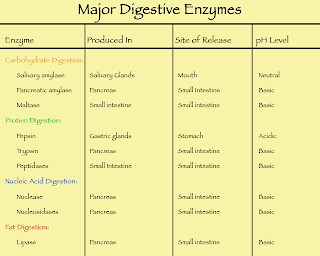
Not everyone should be taking digestive enzyme supplements, and not all of them are created equal. As a practitioner, I find that many people with digestive issues want to jump straight into using a supplement. And many times I would rather try other strategies first. Not to mention, that some supplements can be harmful if used inappropriately. So, let’s dive into a few of the common digestive enzymes, what they do, and who should NOT take them. What are digestive enzymes? Technically, “enzymes” are compounds that help critical biochemical reactions to happen in your body. These reactions can be anything, from making neurotransmitters like serotonin, to burning food for energy, to breaking down the food we eat into smaller pieces that our guts can absorb. Oh, and they all end with “ase”. As I just hinted, “digestive enzymes” are specifically those enzymes we use for digestion. They’re enzymes that our digestive system naturally makes and secretes when we ea...